
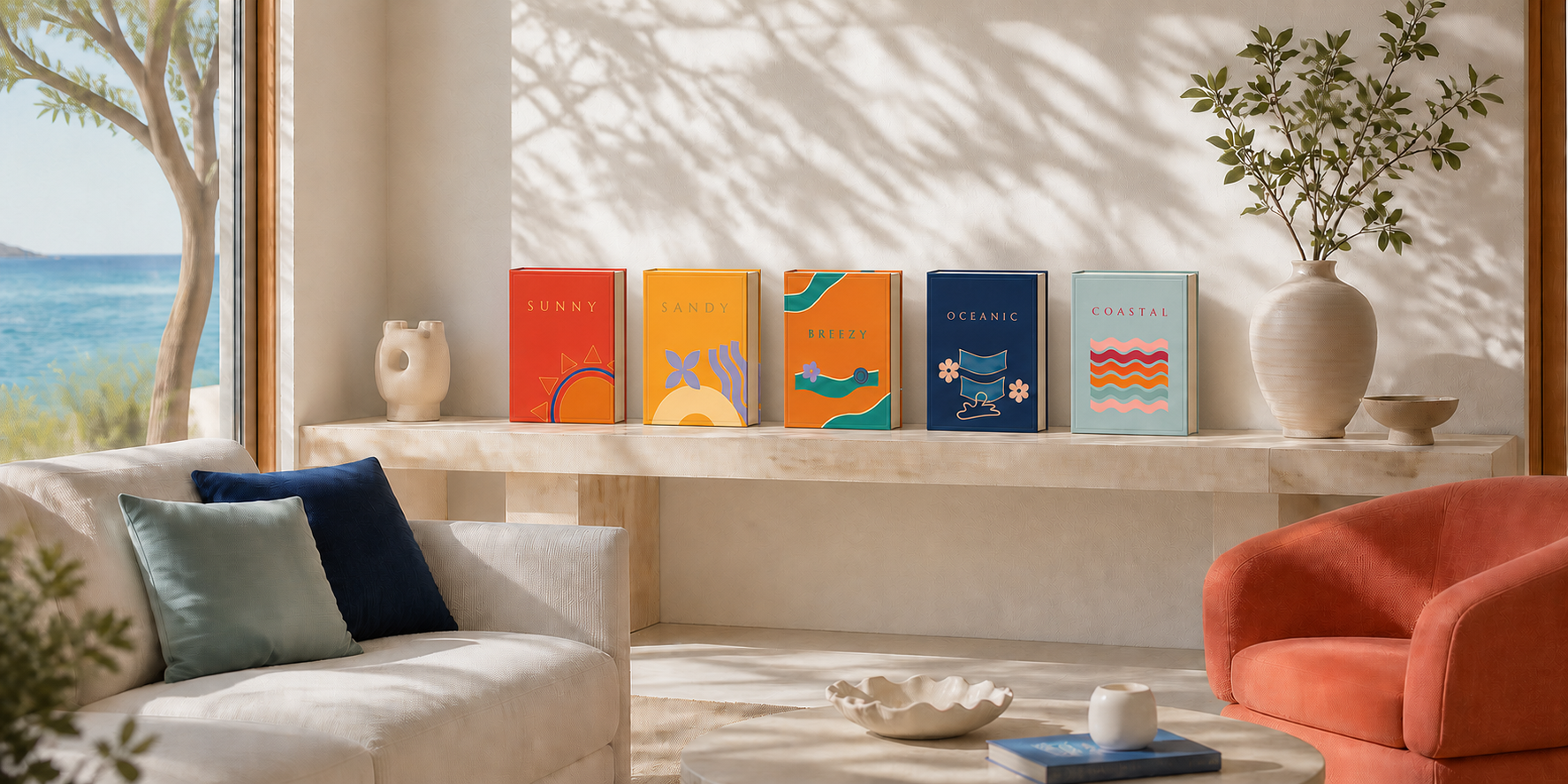
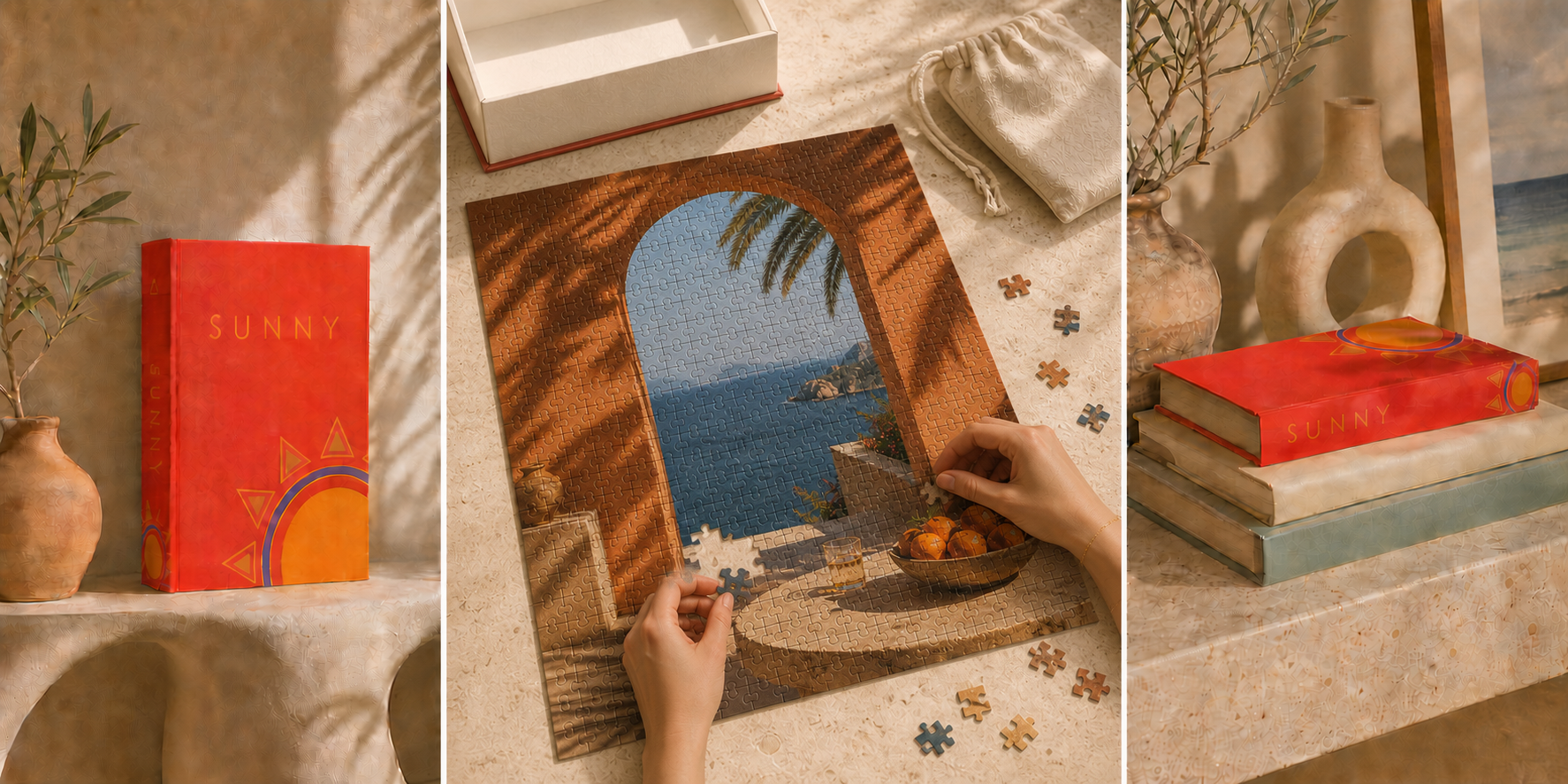
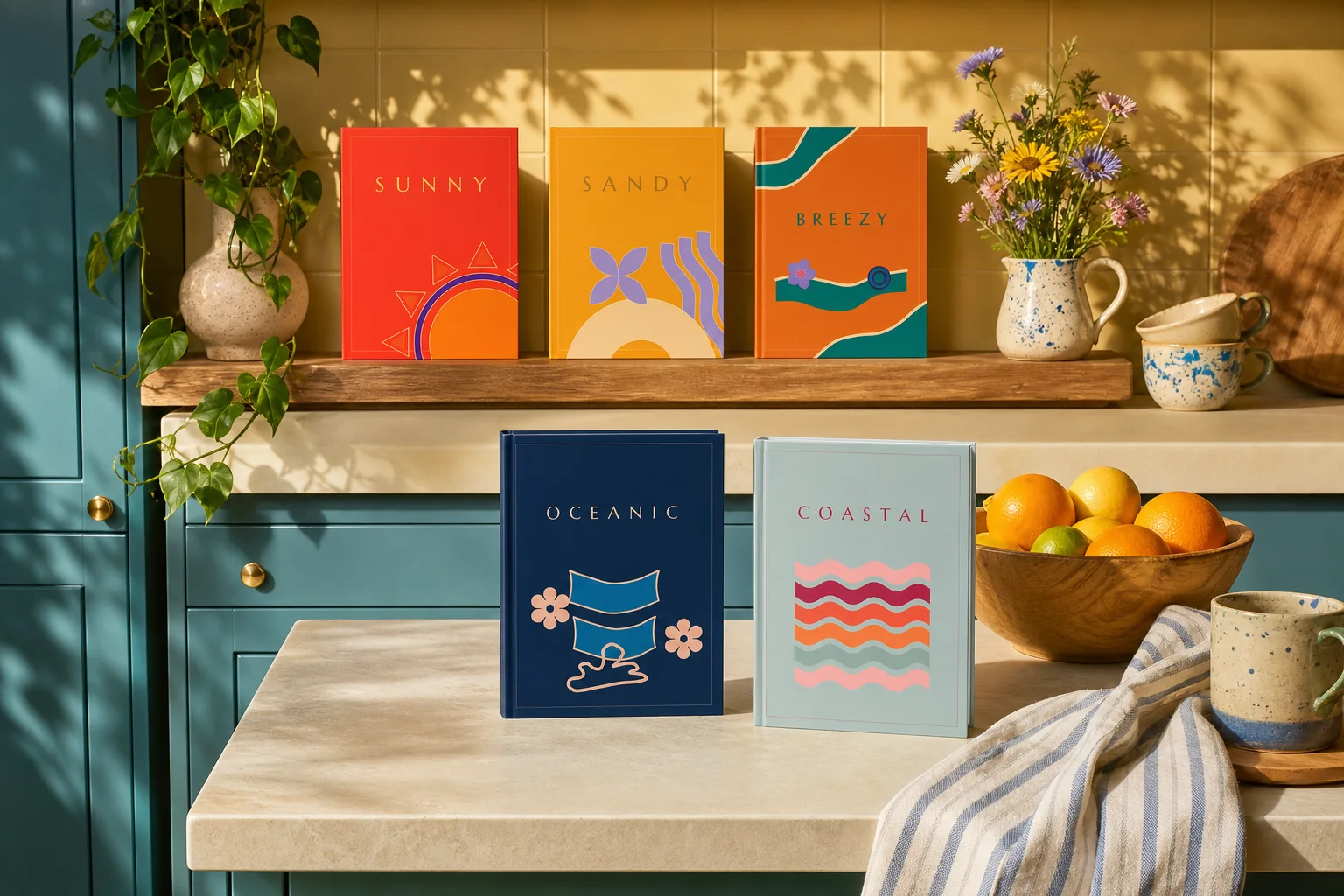



The table becomes quieter. Your attention moves to colour, shapes and the satisfying search for what fits. For a little while, there is nowhere else you need to be.
This is what we mean by puzzle therapy. Not clinical treatment or a replacement for professional care, but a restorative analogue ritual that creates space to slow down, focus and reconnect with the present moment.
Less stimulation, more attention
Completing a puzzle gives the mind one clear task. Instead of moving between messages, tabs and notifications, your attention settles on small visual details: the curve of an edge, a shift in colour or the continuation of a photographic line.
That narrowing of attention may provide a temporary break from competing thoughts. Research into jigsaw puzzling describes this as a possible shift from an internal focus toward positive, external problem-solving.
A rhythm you can return to
Sort. Search. Turn. Test. Place. The movements are simple and repeatable. They create a gentle rhythm without requiring speed, performance or constant decision-making.
Unlike many daily tasks, a puzzle allows you to move at your own pace. There is no urgency attached to the next piece. That steady rhythm can feel grounding because attention repeatedly returns to something physical and immediately in front of you.
A genuine break from notifications
A physical puzzle does not refresh, send an alert or ask you to respond. That matters because research has found that receiving a phone notification can disrupt performance on an attention-demanding task, even when the person does not pick up the device.
Putting the phone in another room and sitting down with a puzzle creates a small boundary around your time. It offers a form of digital detox without requiring another app to guide you through it.
The conditions for flow
Have you ever looked up from a puzzle and realized far more time has passed than you expected? That feeling resembles flow: a state of deep involvement in which attention becomes absorbed in the activity and awareness of time may shift.
Flow is more likely when a task offers clear goals, immediate feedback and a manageable balance between challenge and ability. Puzzles naturally contain these qualities, although researchers have not established that every puzzling session produces a measurable flow state.
The reward of finding the right fit
Each correct placement provides immediate feedback. A section begins to form. The image becomes clearer. Progress is visible in a way that many parts of everyday life are not.
It is tempting to describe every successful placement as a dopamine hit, but the science is more nuanced. Dopamine participates in learning, motivation and reward processing, but research has not shown that every puzzle piece produces a specific dopamine spike. What we can confidently describe is the feeling of mastery and accomplishment.
In a small pilot study, older adults who completed daily online puzzles commonly reported enjoyment, achievement and a welcome break from their routine. The researchers emphasized that larger studies are still needed before stronger therapeutic claims can be made.
Why people reach for puzzles
Relaxation is not simply a marketing idea attached to puzzling. In an Ipsos survey commissioned by Ravensburger, 59% of people who puzzle identified relaxation as a reason they do it, while 47% cited stress relief.
The science is still developing, but the experience is familiar: fewer interruptions, focused attention, physical movement and a challenge that can be completed piece by piece.
Why the image matters
A designer puzzle can offer more than a problem to solve. Its image creates the visual world you return to throughout the experience. Photography can transport you toward a coastline, a quiet mountain or a particular quality of light. Colour can hold attention while also shaping the mood of the ritual.
This is why LOEFT puzzles begin with imagery and storytelling from visual storytellers. The finished picture is not an afterthought; it is part of the atmosphere you spend hours discovering.
A ritual for slower moments
You do not need to finish a puzzle in one sitting for the experience to be worthwhile. Place a few pieces with your morning coffee. Return to it after work. Spend an evening building the image without checking the time.
The value is not only in completing it. It is in the quieter state you may find along the way.
Make space for a slower state of mind. Explore LOEFT.